Showing posts with label Mumbai. Show all posts

August 26, 2010

Think you know real sushi? Think again. -- Wasabi restaurant by Chef Morimoto in Mumbai


I have been to several very good sushi restaurants in my life. A lot of them in the US, on the west coast. Some in Paris with a traditional Itamae (sushi chef) that came all the way from Japan.

But it was in Mumbai - of all places - that I tasted the best sushi of my life.


I had vaguely heard of Chef Masaharu Morimoto in the past.
On “Top Chef”, he is the champion for Asian cuisine.
As I am not a huge fan of media friendly chefs, I thought he was probably overrated.
Well I was wrong.
Deeply.

Chef Morimoto forgive me for my sins; since for me, you are now the god of sushis.

(Appetizer: rice ball in coconut and sesame sauce)

But what can possibly differentiate good sushis from great ones? 

Is it the fish? The rice? Or maybe just the wasabi?
After all, the ingredients are pretty standard… it can’t be that complicated.

Well it is.
Sushi is an art.
And once you’ve tasted this art at its climax, you will understand why I want to call my future son Uni (urchin).
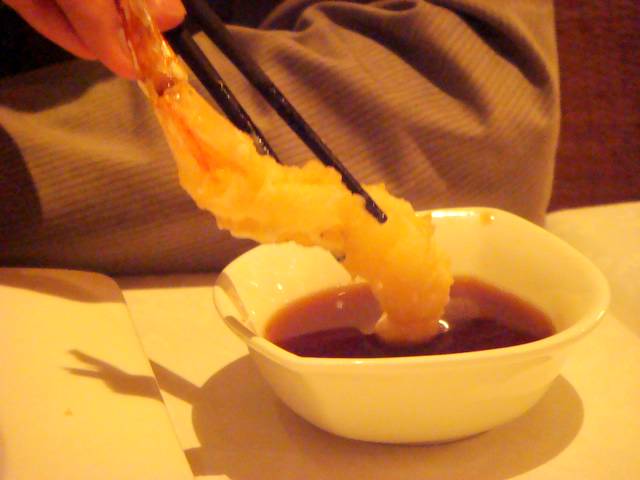


 (Hot shrimp tempura - simply perfection in the form of a fried piece of dough. Who would have thought so?)

Tasting great sushi is the utmost decadent pleasure. Swallowing pure beauty without even chewing it.
It feels so good that it’s almost indecent.


At Mumbai’s restaurant Wasabi by Morimoto, sushi is art.
Service is perfect of course and the view on the gateway of India is magnificent. But nobody gives a damn.
The food is that good.


(A simple salmon maki. With fresh wasabi. Not that green paste Japanese restaurant usually serve you. And oh yeah: the fish is directly imported from Japan. Every day)


(Black cod in miso paste. Gorgeous). 


Chef Morimoto, thank you.
And please, come to Paris. 


August 11, 2010

A taste of France in Mumbai - Le 15 Pâtisserie


I’ve recently fallen in love.


I’ve been swept off my feet by the most unlikely little fellow.
Not Shahrukh khan or any other Bollywood star.
Not my cute 15 year old Indian pantry boy who takes pictures of himself in the mirror with my camera while I'm at work.
Not even the lovely little white dog that sleeps night and day on my door step and doesn’t budge when I step over him.


I’m a talking about love at first sight.
Or at first taste should I say.
The real deal.

I am talking about le 15 Pâtisserie.


Le 15 is a little shop in a hair salon right next to my house in Mumbai

I noticed it for the first time at the beginning of June and was very intrigued to see heavenly looking Lemon tarts and Macaroons on their stall.


It took me a few days to finally decide to try one of their products out – I think I was influence by the ^ on Pâtisserie. So French. So authentic.


And then it happened ; as if I lightening had struck me


Crisp and light, zweet and tangy, crunchy yet smooth.


It was the French culinary arts epitomized in a small unpretencious lemon tart.


It felt too good. 
So my boyfriend – who incidently is addicted to chocolat and has devoured no less than 5 le 15 Patisserie macaroons since I have started writing this article ("I'm just trying out the products honey", "yeah right") – said to me :
‘Pauline, we need to meet these people. 
I don’t know who they are, why they are here in Mumbai and if they are mean, ugly and stupid but I need to understand how it is possible to create such perfection. Here in India !’


So we wrote an email to le 15 and got to meet both Chef Mukul and Pastry Chef Pooja.


My boyfriend’s fears were unfounded though ;


They were even sweeter than their macaroons.


I really encourage anyone in Mumbai to try anything at le 15 Pâtisserie.


You cannot be disappointed. The only thing that might happen is that you develop a severe addiction.


Like me.


Le15 Patisserie,
Shama Hair and Skin Boutique,
 Krishna Building, Near Podar Hospital, 
JN Palkar Road, Worli

July 16, 2010

Why foreign women and wine have a bad reputation in India - Part 2


Now -or if not check this out - you know why foreign women have a bad reputation in India. The reason, basically, is ... Bob Dylan

But what about wines? 
Why is everyone so adamantly – and wrongly for that matter –convinced that Indian wines are disgusting?

Goa.

Again. I know, it is starting to get nerve wrecking.
The city of sin has done it one more time.

The reason why Goa is at the center of the international despise towards wine is not because Hippies used to produce wine along their hashish plantations.
Neither is it because Saint Xavier and the Portuguese Inquisition viciously pored wine on the wounds of the poor Hindus they had just scorched.
The reason is much simpler. 
And not as entertaining unfortunately for you (and for this site’s bounce rate).

But first, let me take you through a little history:

Experts believe the grape vine was introduced in India from Persia around 2500 BC as wine is mentioned in the Vedic texts as Soma and Sura. Throughout the middle-ages and modern times, wine was the drink of warrior castes (the Kshatriyas), along with beer and other spirits made of wheat, barley or maize in the North and rice in the South.
The Mughal emperors developed and maintained vineyards in the Deccan region as did the British during the 19th century.
However, almost all of India’s vineyards were wiped out by phylloxera in the 1890’s. 


After the independence, the Indian Constitution strongly deterred the consumption of alcoholic beverages and imports were severely monitored. These principles were expanded with the graduate prohibition of imported alcoholic beverages throughout the country and the introduction of constraint licensing under the control of the Central Government.

Despite these heavy constraints some areas continued to produce wine such as the state of Goa where vintners used ‘Bangalore Blue’ grape to make cheap wines.

Now this is the interesting part for us.


Bangalore blue wine has the status of wine, it has its color, its alcoholic content and its name.
But that’s about it. All other similarities are pure fantasy. Some say even drunkards don’t appreciate it and that its sole purpose is to get you wasted. And it succeeds in doing it very nicely.

The problem is that Goan wine was basically the only wine available in India for 25 years. So of course people now believe Indian wine means cheap, yuky, undrinkable grape juice.

But that is far from the truth. 

As I explained it in a previous article about selling wine in India, Indian wineries have developed throughout the 1990’s and 2000’s and now produce some very decent wines. It all started out with Indage – known as Champagne India now – who built a first winery in the valley of Nashik in 1985. From then on, other players stepped into the wine industry and wineries continued spreading in the valley of Nashik, Maharashtra. There are up to 65 wineries in the state of Maharashtra today, producing Cabernet Sauvignon, Shiraz, Chenin, Zinfandel and even Viognier. 

I tasted wines I actually enjoyed very much here. Like Sula Dindori or Nine Hills Cabernet Sauvignon Reserve. Actually, I was even surprised at the level of achievement of these wines. 

I'm not saying they are perfect but they surely are enjoyable with a nice curry masala dish. 

Here's one of my tasting note for Nine Hills, Chenin, 2009

Nose: nice fruity tanginess. Orange, passion fruit and pineapple. 
Mouth: the structure is really straightforward. The wine doesn't drop in the mouth, its crisp yet full and the length is good. 
Overall this is a very easy wine to enjoy. Perfect for beginners in wine drinking because the fruitiness is really appealing to the palate. 

So you see, its like I explained it in my previous article, there's a misconception about Indian wine. 
In the same way as Goan based westerners don’t walk about naked smoking hash and pot all day anymore, Indian wine is not the low-quality grape juice it used to be. 

Yet they still suffer the reputation Goan history has cursed them with. Shame. 


July 13, 2010

Why foreign women and wine have a bad reputation in India - Part 1


Ok so I’m putting women and alcohol on the same level. Sin and Sin again some may say. And sadly, India is not the only place where both are highly prejudiced.

But in India at least there is an underlying reason which explains it all. A vessel that links foreign women and booze. Three letters …

Goa.
How did this happen? Follow my words…

As I do not want to bore my very few readers to death, I will divide this article in 2 parts.
Part 1 – Women

Goa has many names: city of sin, city of wine, city of the Portuguese Inquisition.
The smallest state in India yet the most frowned upon.
Goa started out its road towards fame by being a Portuguese port. There, Saint Xavier, one of the founders of the Jesuit order – with his friend Ignacio from Loyola – was an active converter. In fact, the Church was so adamant about converting Hindus to Christianism that the hundreds of temples of the State were destroyed by the Portuguese. The Inquisition played a scary and famous role in making of Goa one of the most renowned places in India.


Yet, by the 1970’s this bloodthirsty past was very well over.

The vicious members of the Portuguese Inquisition – I won’t describe what kind of torture they used on recalcitrant Hindus because this is a food blog after all – gave way to vicious people of another kind.
Hippies.


In the 1970’s, Goa became the hub for nudists, hashish and trance music. People knew how to have fun back then. Sex, drugs and swimming naked in the ocean were basically the 3 main activities of the westerners living on the Goan coasts.

(for the sake of my readership I kept this image in small format ...)


Consequently, as you may imagine, local Indians were a little taken aback (major understatement). Indian men probably didn’t mind having a pot-headed, dreadlocked, all-loving western girlfriend but they sure as hell didn’t approve of them.

Because you see, Indians are pretty conservative when it comes to women.

Women should be covered by clothing from shoulder to toe. They should be married by age 23 – with a male selected by the family of course. And then wear signs of their married status in order not to entice other men.

Oh, and trains have separate wagons for men and women of course.


So when foreign women in Goa started showing their assets a little bit too conspicuously, people started thinking. They started to think that foreign women were easy (to put it nicely). And now, for this reason, I have to wear big bangles when walking alone in Mumbai.

June 22, 2010

Where does "mumbai" come from, the Kolis, and other random facts and pictures


Mumbai is a bustling city made of many paradoxes. For the classic European traveler it may prompt many surprises...


Actually it is said that the European word Bombay (the previous name for Mumbai) comes from Portuguese sailors who cried "Bom Baia" (Beautiful bay !) upon their arrival. 
Originally, the city of Mumbai was made up of seven small islands- Bombay, Parel, Mazagaon, Mahim, Colaba, Worli and Little Colaba.


The seven islands were a part of the Magadha Empire ruled by Ashoka (the most famous Indian emperor) 3 centuries BC. However, after the fall of the Magadha Empire, deep-sea fishermen called the Kolis became the island’s chief inhabitants. These fisher folk worshiped Goddess Mumbadevi from whom the city derived the name “Mumbai”.
What is interesting about this is that the Kolis are actually still present in Mumbai and have their own little port in the middle of the bay area. 


What is even more interesting is the way the other Indian communities describe the Kolis.
Here is what I found on Indiaprofile.com a site dedicated to tourism in India. Insightful as well as entertaining ...
The Kolis-fisherfolk-of Mumbai are a distinct community. In Their dress, their language, their food and their lifestyle they are easily distinguishable. Especially the economically independent Koli women who are aggressive to the point of being quarrelsome.

Blocking the exit of the ladies compartment in the local train, dressed traditionally in their bright patterned sarees, noisily exchanging greetings, are the fisherwomen who squat on the floor of the train with their huge baskets of the fish. Working women hold their neatly pleated, flowing sarees well above their ankles as they gingerly tip-toe around them to avoid any close encounter with the fishy kind. If you hold your nose close to the offensive smell, the fisherwomen range in annoyance and God help you if you dare to object to the presence of her stinking fish in the commuters compartment. She’ll not merely threaten to douche you with fish water but I have been witness to a wrathful fisherwoman fling a fish rather accurately at a very well dressed young woman reducing her to tears!

Kolis, as the fisherfolk are known in Mumbai, are known to be easily excitable. Even an ordinary conversation between them often leads to a noisy quarrel in which abuses are easily exchanged. An exaggeration it may be but the statement is not inaccurate, that ‘a Koli sentence never begins without a vulgar epithet.’ Rather pleased with her aggressive image is the kolin and in the regional Marathi language kolin has become a synonym for an ‘abusive quarrelsome woman’. 

 OK. 
So you can guess that India is a country were casts, differences and "races" are quite significant.


As a living proof of this let me tell you another interesting fact: 

any Caucasian looking women walking in the street of Mumbai will be the target of Indian men pinches (and I am not talking about slight discreet pinches, what I am referring to is hard-core crab-like intentional pinch). 
A friend of mine who has been living in Mumbai for over a year now, gave me her secret weapon for retaliation: 

Bangles
It sounds stupid I know, but she actually wears broad metal bangles on her forearms (I'm sure she would wear spiky ones if you could find some on the market) in order to give those nasty pinchy fellows a good hit on the fingers. As she shrewdly told me: it does prevent them from doing it, but does give me a personal sense of gratification... and an excuse for buying jewelery ! 


June 21, 2010

My first Indian Wedding

This post will be a little off my usual topic but I just couldn't resist writing something of one on the most entertaining experience I've had since my arrival in India:
an Indian wedding.


People had told me Indians could get a little over the top when it came to celebrating. They said Indians liked to party and didn't mind a little glitter from time to time. They explained that women would be slightly over dressed...
Major understatement.

I thought I was prepared. Grave mistake.
Stepping past the entrance door of the Taj Lands end in Mumbai propelled me in the middle of a Bollywood movie/Maharajah palace/MTV clip. My epileptic friends beware, so much glitter, shine and gold can be lethal.

Now I'm just being silly. I actually had a fantastic time.
Indian weddings are extraordinary celebrations with up to a thousand guests, filled with rituals and lasting for several days.
The first day was about dancing and festivities. The groom and bride's friends had formed groups of 6 and practiced a choreography for several weeks prior in order to be ready to fight for the best moves on stage in front of the whole assembly.
Have you seen Zoolander? The dance-off?
Same thing but with more jewelery.


After performing on stage the winning group was elected by applause of the house. And let me tell you the house was on fire.

On the second day, came the traditional Pushkar. A wedding procession with the groom on a (heavily) decorated horse. The groom is dressed in a sherwani (long jacket) and churidars (fitted trousers). On his head he wears a sehra (turban). The baraat (basically the groom, his horse, his relatives and friends and all the jewelery they can wear at once) is headed by the dancing of the congregated folks. When arriving at the venue of the wedding, the groom is welcomed by a welcome song called talota. Then the groom knocks on the door with his sword and enters the wedding room.


I could go on and on and describe the whole celebration but I think pictures will be way more efficient than my blabbering. Enjoy !


June 13, 2010

Selling wine in India


Some of you might know this already, but I have left France to go to Mumbai for the summer.
This explains the lack of posts lately.

I am working for a French company selling Indian grown wine in the West region of India (Maharashtra, Gujarat and Goa mainly) for 3 months.

What’s interesting about this mission is that wine in India is only nascent. So I’ll be at the vanguard of any further development for wine in a country whose population should outgrow China’s by 2030.

To tell you the truth, wine is only at its premises here: although Indian wineries have emerged as soon as in the 1980’s (Château Indage) and developed in the mid 90’s (Sula), the local population is still very far from having the reflex of drinking wine when they go out for dinner.


For most Indians, there are no such things as varietals and wine is only red or white. Women are still very reticent to drinking any alcoholic beverage whatsoever.
And men … well they prefer whiskey.

So you can imagine that the quality of Indian wines has long been the least of Indian producers’ worries…

Thus, education and tasting opportunities during weddings or banquets will probably be the only means to carve in Indians’ minds that wine is not a drink whose sole purpose is to be mixed with orange juice (true story) in order to make cocktails.

The higher classes are starting to get more and more interested in wines, although they are focusing on international brands for now. The trouble with imported wines though is that they are submitted to very heavy levies. For instance a bottle of Moet champagne which revolves around 28 euros in France would be 118 euros here.
Ouch.

India has been part of the WTO sine 2007 but when you see that imported spirits are taxed at more than 250% you understand why Europe and the US are regularly in dispute with India.  

I’ll try posting when I can, although my days are pretty packed.
I’d like to let you know about my experience here, with a main focus on wines of course but I will also certainly just talk about living in Mumbai and getting accustomed to the Indian life style.

Next post will be about my first Indian wedding…

Have you seen Bollywood movies? It was just like being in the middle of one…

Related posts

Related Posts with Thumbnails